




Most first terrariums die the same way. Plants go straight into plain soil, someone waters generously, the lid goes on, and a week later the jar is a fogged-up swamp with rotting stems. The mistake is skipping the layers beneath the soil.
The fix costs five minutes. And terrarium making at home gets easier once you stop treating the jar like a plant pot. It is a tiny weather system, and the plants largely mind themselves when the foundation is right. Below: the layer order, the plants that survive, the care routine, and an honest word on kits versus workshops.
The mistake that kills most first terrariums
In a sealed bottle, water has nowhere to escape. Moisture rises, condenses on the glass and drips back down, which is why a healthy closed terrarium can go weeks without you. The same loop turns fatal if the soil starts soaked: extra water pools at the bottom and the roots rot.
Two things prevent it. A pebble drainage layer at the bottom gives surplus water somewhere to sit, away from roots. A thin layer of charcoal above it keeps the closed air fresh instead of sour. Skip either and you are cultivating fungus, not a garden.
Terrarium Making at Home: the layer order that decides everything
Figuring out how to build your own terrarium? This bottom-to-top order is the entire secret.
Layer one. Pebbles or gravel, about a finger deep, so extra water has somewhere to go.
Layer two. A thin sprinkle of charcoal, so trapped air stays fresh.
Layer three. Potting soil, deep enough for roots to settle.
Layer four. The plants. Nestle roots in, firm the soil gently.
Layer five. Moss and decorative pieces, one gentle mist, then the cork if sealing.

Tools matter more here than in a bowl, because fingers do not fit down a narrow neck. Terrarium making tools can be humble: long tweezers to place plants, a chopstick to coax soil into corners, a small spray bottle. Pure jugaad, and no one can tell.
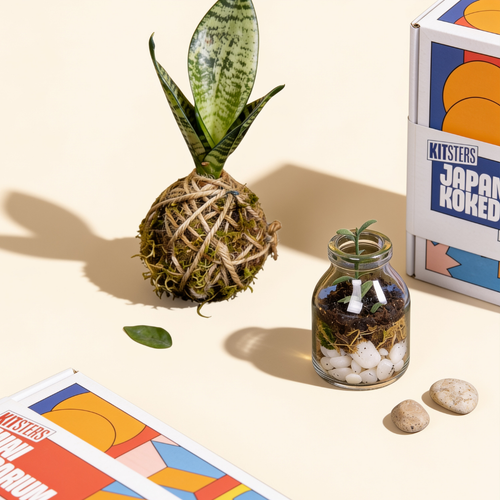
Every layer ships portioned inside the glass bottle of the Kitsters DIY Mini Terrarium Kit. Plant, arrange, mist, cork. Twenty to thirty minutes, and afterwards it sits on a desk, windowsill or shelf running its own weather.
Shop DIY Mini Terrarium Kit (₹999) →
How to Make a Natural Terrarium
Tiny mushrooms and fairy houses are one school of terrarium. The other is why people search how to make a natural terrarium: a jar that looks like a slice of monsoon forest floor, all green, nothing cute. It is the easier style to pull off, too.
Moss is the hero. Press it onto the soil in soft patches, add one or two small leafy plants, maybe a single stone, and stop there. Moss thrives in still, humid air, exactly what a corked jar provides, so keep the decorative elements minimal and let the green talk.
Terrarium making materials: the honest shopping list
From scratch you need a glass vessel with a lid, pebbles, charcoal, potting mix, a few small plants, and moss. Pebbles are easy; any aquarium shop sorts that. Potting mix likewise.
Then it gets fiddly. Horticultural charcoal sits in few neighbourhood nurseries, and genuinely tiny, shade-happy, slow-growing plants are luck of the draw. Most people asking how to make terrarium plants at home are really asking which plants will survive a jar. The brief: small, moisture-loving, slow, tolerant of shade. Temperament matters more than looks.
A terrarium making kit exists to delete that shopping trip. The Kitsters version skips the improvising too: the bottle, the layered materials, the plants and the decorations arrive in one box, so the evening starts with making, not hunting.
Searching a terrarium making workshop near me? The honest trade
Workshops are a genuine evening out, and there is no shame in that search. You build once, on someone else's timetable, with whatever moss is left by the person before you. If a plant lands wonky, that is your terrarium now.
At home the trade flips. Pause mid-layer. Redo a placement at midnight over chai. The finished bottle lives on your shelf, not in someone's event photo. That is why ours come as complete setups rather than a bag of soil and good wishes.

If your ambitions run past bottles, meet kokedama, the Japanese moss ball. Wrap a plant's root ball in a prepared soil mix, bind it in moss and twine, and you have a living sculpture to hang or rest on a surface. No prior plant or craft experience needed, and it looks absurdly professional.
Shop DIY Japanese Kokedama Kit (₹799) →
Making an evening of it with someone? The combo pairs both kits at ₹1,600: one of you bottles a terrarium while the other sculpts a moss ball. Zero gardening skills, and the chai is optional but recommended.
Shop the Terrarium and Kokedama Combo (₹1,600) →
Living with a closed terrarium
Once corked, the bottle regulates its own moisture. Soil and leaves give off vapour, the glass collects it, and it returns to the roots, so your job shrinks to supervision. Light condensation drifting up the sides is the system working. Constant thick fog means too much water. Uncork for a few hours, let it breathe, seal again.
Hold that balance and it stays green for months with occasional care. A quiet living thing, not another chore. If you are the type who drowns plants with love, a sealed jar is oddly your best friend, because it protects the garden from you.

Terrarium questions people ask before starting
How do you make a simple terrarium?
Layer pebbles for drainage, add a thin charcoal layer, then potting soil, small shade-loving plants and moss, in that order, inside a glass vessel with a lid. Mist lightly, seal, and let the jar recycle its own moisture. A pre-portioned kit shortens the whole build to about twenty to thirty minutes.
Can I build my own terrarium without a kit?
Yes. You need a glass jar or bottle with a lid, pebbles, thin charcoal, potting soil, small humidity-loving plants and moss. In most Indian cities the charcoal and the genuinely tiny plants take a couple of shopping stops. A kit bundles everything, bottle included, so you can begin the same evening.
How long does a terrarium last at home?
Months, with only occasional care, when the layering is done right, because a sealed bottle recycles and regulates its own moisture. Watch the fog rather than the calendar. Light condensation is healthy. Persistent heavy fog signals too much water, so air the jar out for a few hours. Open terrariums want a small mist now and then.
Tiny gardens ask for very little: one good evening, a few patient layers, a shelf with light. If the idea has taken root, browse the full range of screen-free makes in the Kitsters DIY collection and pick your next mess.