





Magic Hour
The team experience that runs itself.
One hour, one kit per person, infinite possibilities.
Plan your team bonding, engagement activities for the whole year - in 30 minutes.
₹499per kit / per person
Minimum 5 kitsThat's it, then 10, 15, 20...
Freedelivery, across India
Delivery within 7-8 business days across India. Tell us your date - we'll work backwards from it.


Trusted by teams at


From the makers of Kitsters - India's largest DIY kits company for adult.
Smoothest Ordering Guaranteed
Pick The Kit,
Pick The Kit,
Order The Magic
Whether you're an early startup or a corporate machine, enjoy our kits that are priced equally, curated equally, and delivered within 7-8 business days - with the only difference being what you do with it!


Logistics & pricing
Simple enough to approve in one email.
Whether you're ordering for 5 people or 5,000 people, your kits will be delivered to you anywhere in India, with all the material you need.
₹
499
per kit + 18% GST
Sample order
- Activity of choiceFridge Magnet Making, and 19 others
- Minimum order5 kits for ₹2495 + 18% GST
- Delivery point217, BGTA Ganga, Sion, Mumbai 400037
- Time to delivery7-8 business days
How to order
Three steps. That's it.
-
Pick your kits
We have 20+ options for you to choose from! With new ones added every month, it keeps a team going for years without repeating one.
-
Place the order
Select the quantity you need, add the billing details and process the order. Delivery within 7-8 business days.
-
Host the Magic Hour
Set up the kits whenever you want and let the magic unfold! Watch your team get curious, creative, and create the most amazing things.
- Venue
- Facilitator
- Fixed time
None needed.
And about the mess: every kit includes a messy mat. They work on it, then wrap everything up in it and bin it. Nobody is scrubbing paint off the conference table at 6pm.
That's the whole process. Three steps and let the magic unfold!
No commitment on the call - we will tell you if it is not a fit.
Inside the hour
How a Magic Hour
How a Magic Hour
runs itself
-
 0.00
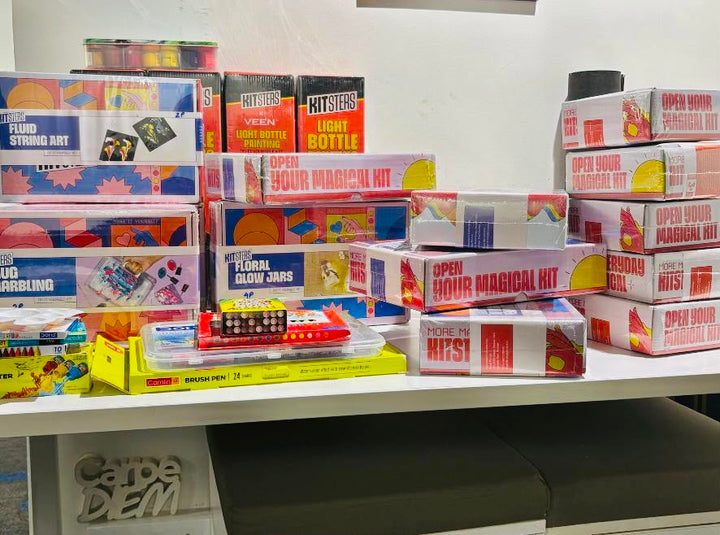
0.00Place the kits on the table, one kit per person
-
 0.00-30.00
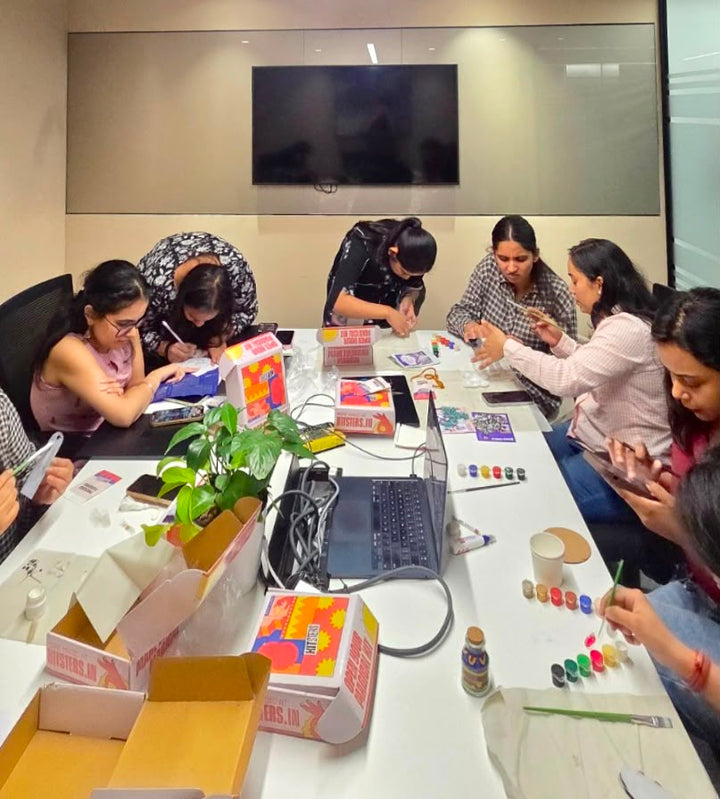
They open, scan, and go. No brief, no expert needed!
-
 30.00-45.00
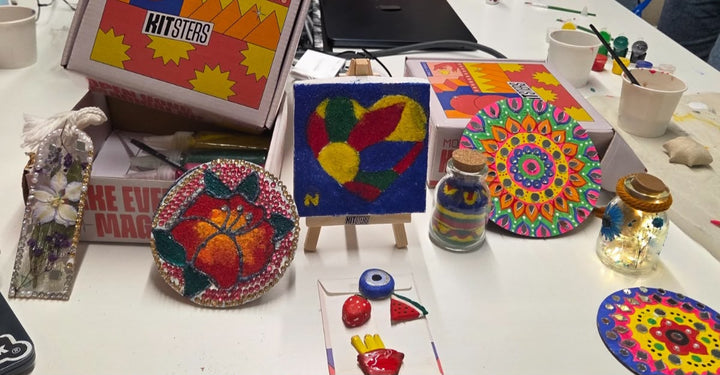
What they've made goes on the desk. The messy mat goes in the bin
Why it works
How the magic
How the magic
happens!
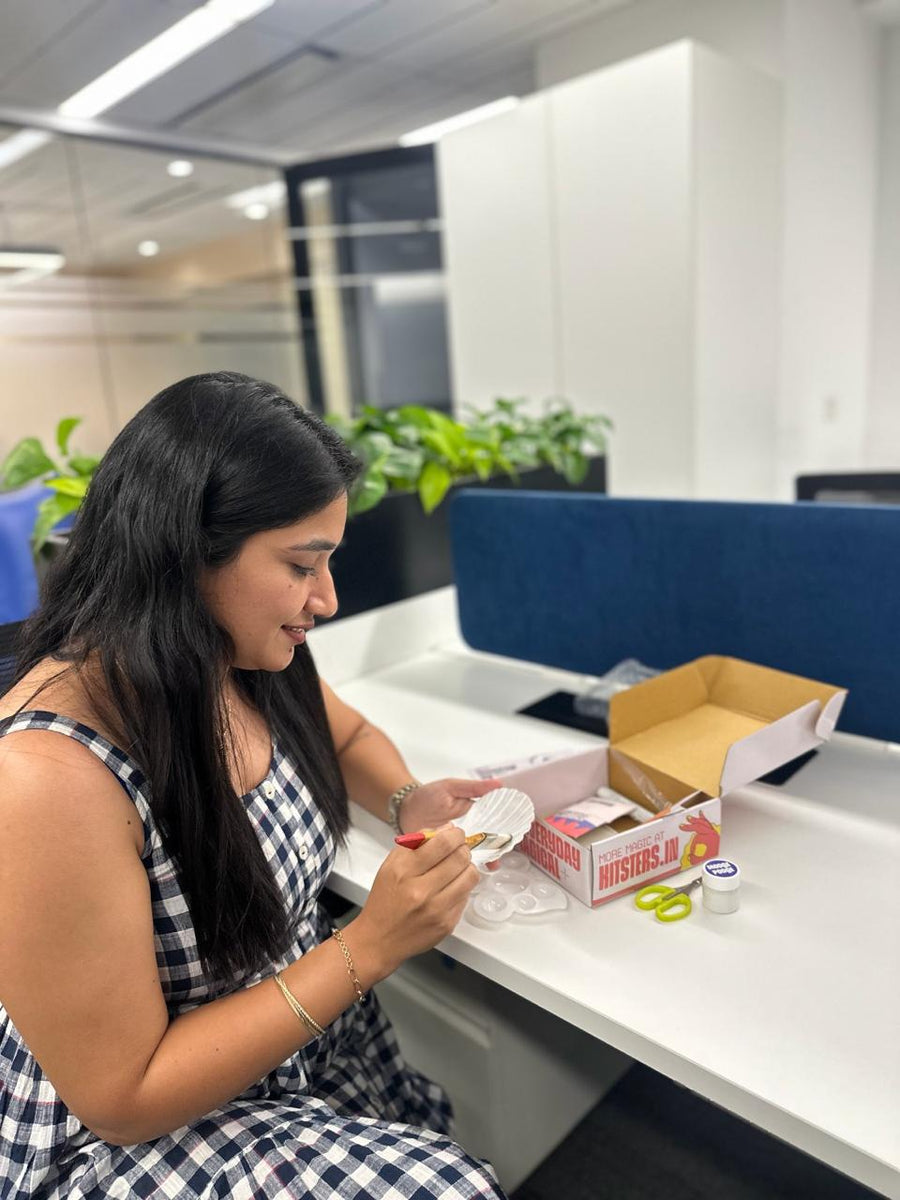
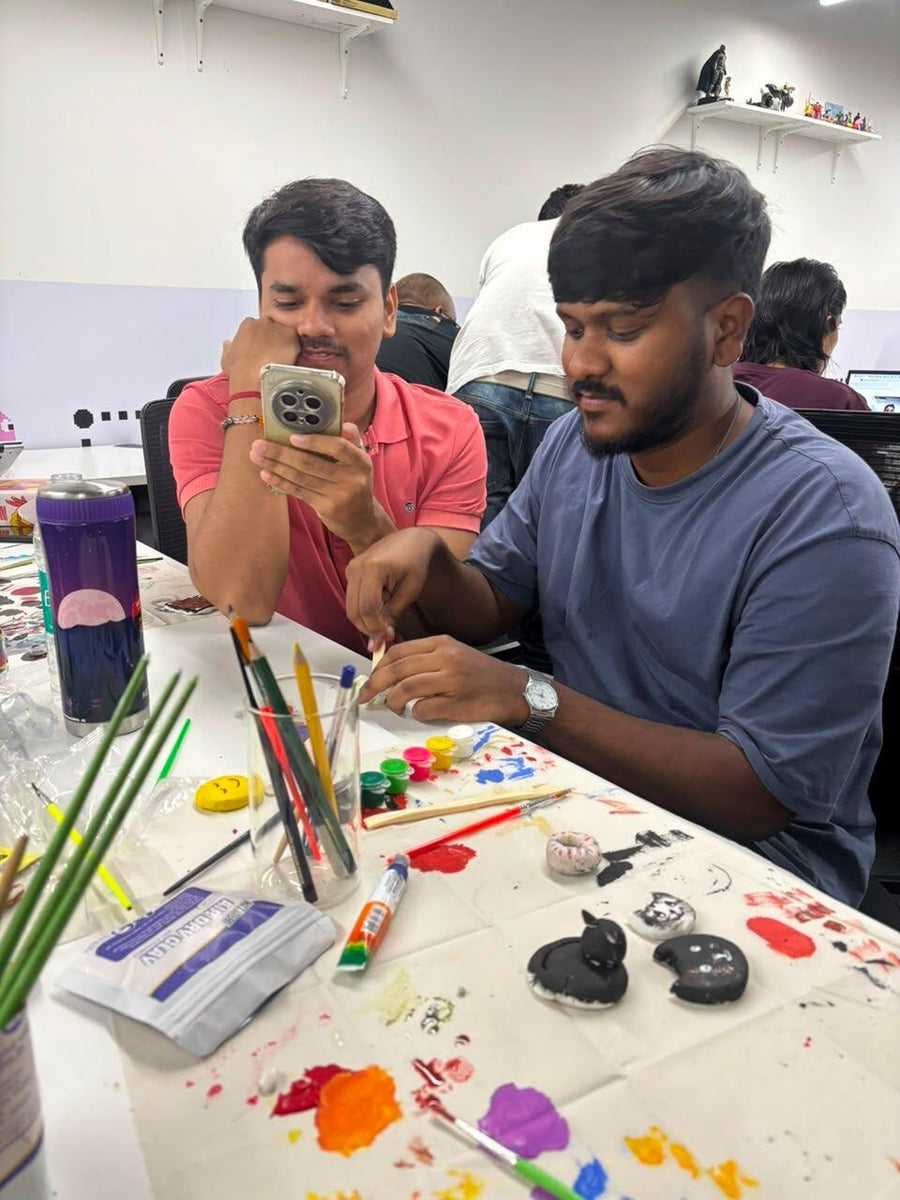
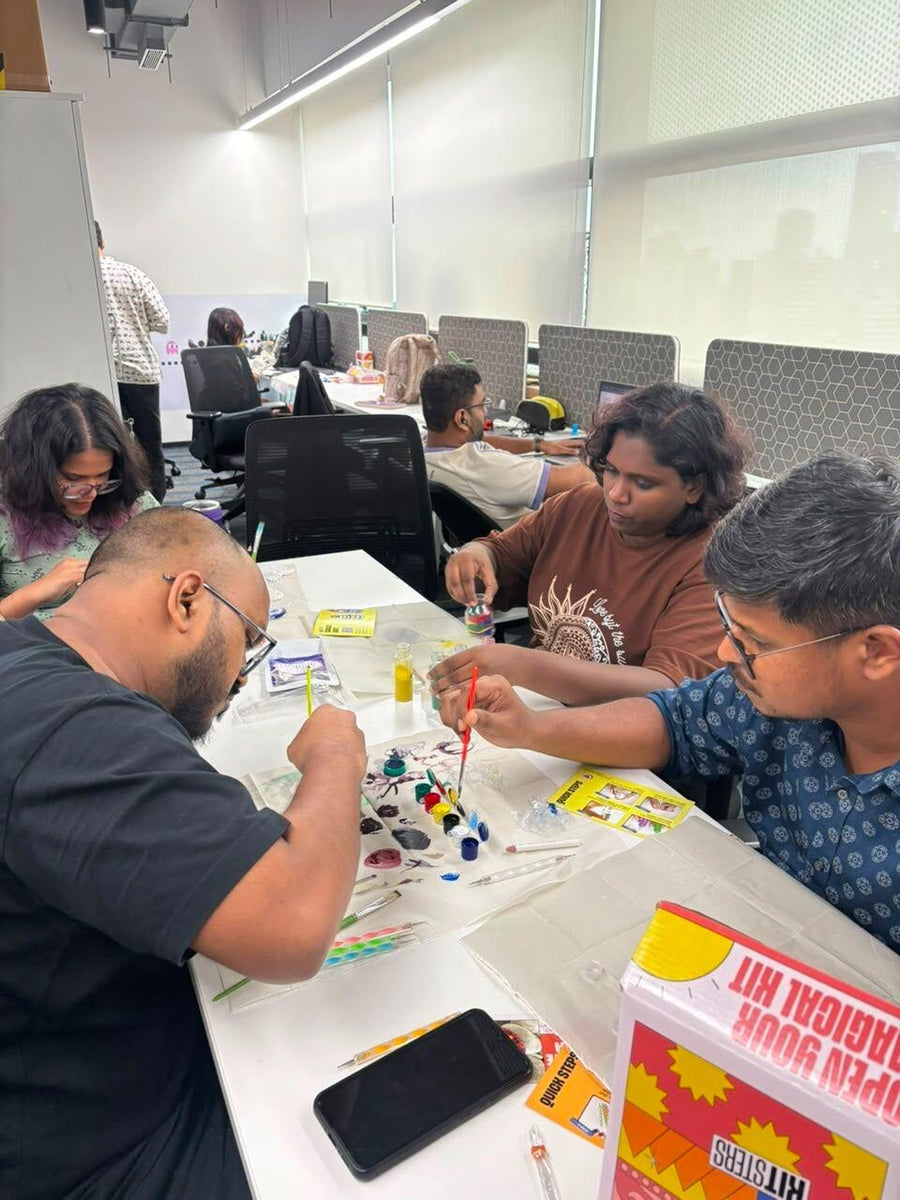
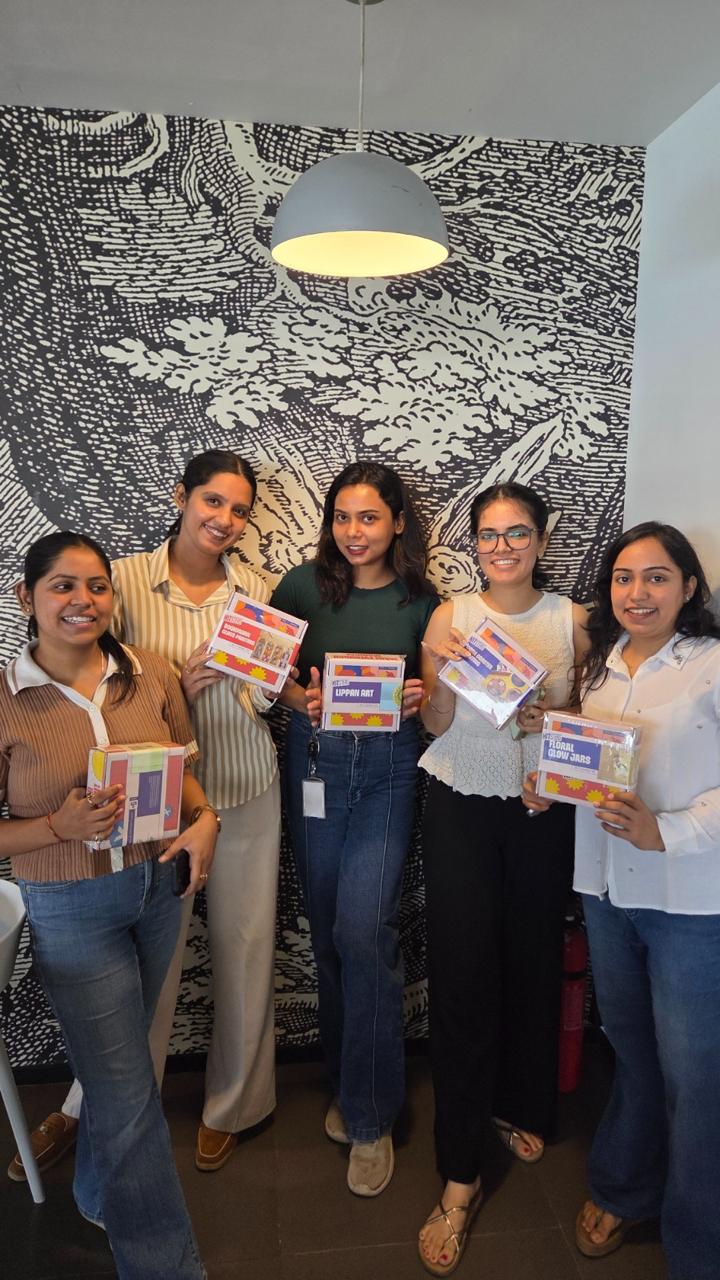
Magic isn't what got created
But everything that happened on the way there
Don't believe us? Take a look!


How is Magic Hour better?
| The booked workshop | Magic Hour | |
|---|---|---|
| Who leads | An expert at the front | Each person, figure them out |
| When it happens | One fixed slot everyone must make | You decide the time |
| Where | A booked room, in person | Office, home, offsite, anywhere |
| Remote & hybrid team | Left out, or on a screen | Same experience, same box |
| What it builds | Following instructions | Curiosity, initiative, problem-solving |
| What HR does | Coordinates everything | Can focus on curation |
| Cost of a no-show | The seat goes to waste | The kit waits for them |
| Planning the year | Twelve new quotes | One number, decided once |
Occasions
Your calendar already tells you when.
Every HR year has the same dozen moments in it. We have 20 kits that fit them.
2026
12 months · 20 kits
Jan
Republic Day
Feb
Mar
Women's Day · new joiners
Apr
Quarter close
May
Jun
Offsites
Jul
Quarter close
Aug
Independence Day
Sep
Quarter close
Oct
Festive gifting
Nov
Diwali
Dec
Year-end
New joiner cohorts
The fastest way to get strangers talking.
Diwali & festive gifting
A gift they'll use, not another sweet box.
Independence Day, Republic Day
Mark the national days without a token gesture.
Quarter close
The week after the push, when everyone's flat.
Offsites & team days
The one session with no facilitator to book.
Fully remote teams
Same box, twelve doorsteps, one shared hour.
Women's Day, work anniversaries
The dates you're expected to mark.
"There's a thing next week and nothing planned"
Genuinely our most common order.
Whichever one you're staring down, it's the same order. Map your twelve months with a curator once, and you'll know the plan and the price before the year starts.
FAQ
The questions you're about to ask.
Will people actually do it, or will the kits sit in a drawer?
In our experience, everyone opens the kit within minutes! The packaging does most of that work. It is designed to excite the child within us. If you are distributing to doorsteps rather than running it in a room, we'll send you a short nudge sequence you can forward.
Is this just arts and crafts?
The materials are creative. The point isn't. We build these for adults who haven't made anything with their hands in years, not for people who already own a craft cupboard.
What if my team isn't "the creative type"?
Almost nobody who sits down to their first Magic Hour thinks they're the creative type. That's exactly who it's designed for - there's no skill floor and no wrong outcome.
Can you deliver to people working from home?
Yes, but only for orders with more than 50 kits. In case you want to place an order for more than 50 kits with individual deliveries needed, please connect with aayush@kitsters.in or WhatsApp us at +91-9136079469.
How long does it take?
Most people spend 45 minutes to an hour. There's no clock and no session to end.
What's inside the kit?
Everything needed, for one person - nothing to buy, print or prepare. What's inside depends on which activity you choose. Every kit also comes with a messy mat - they work on it, wrap everything up inside it when they're done, and that's the entire cleanup.
Do we have to do the same activity every time?
No. There are enough activities to pick from that a team running this twice a year can go years without repeating - and you can run different activities for different teams in the same order.
Will you send us a GST invoice?
Yes we will. While ordering the kits here, make sure you fill the correct Company details (Company name, GST number, Registered Address) and the point of contact's (POC) email ID so that we can create a correct GST invoice and have it sent to the email ID of the POC.
When will we receive the GST Invoice?
You will receive the GST invoice within 24-48 hours of the transaction being completed on the website. In case you do not receive an invoice in your inbox, kindly check your spam - you will receive the email via accounts@kitsters.in. In case of no invoice, kindly email accounts@kitsters.in your order ID, we will get the invoice sent to you ASAP.
Can we really order online without talking to anyone?
Yes, absolutely! Pick the kits, choose your quantity and check out like any online order. Free delivery on every order! Anything above 50 orders, connect with our curator for ideas and discounts. Reach out to aayush@kitsters.in
Still holding a question this list did not answer?
Give your team
the magic it needs!
Order 5 kits online in two minutes. Or if you're planning something bigger, fifteen minutes on a call and you'll know whether this fits. If it doesn't, we'll say so.
Most questions take about two messages.
Give your team the magic it needs!
Order kits